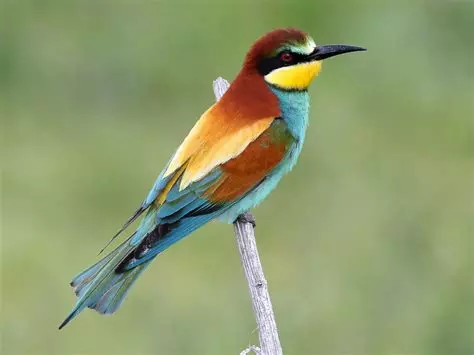
Bee-eaters: The true safari is in Valencia
The 10,000 km Journey
The arrival of the European Bee-eaters (Merops apiaster) is an event enjoyed in secret and in absolute, sacred silence. Very few look up at the sky, taking their eyes off their smartphones, to welcome this traveler. If we could see their geographical journey through their eyes, we would be surprised to learn that they travel about 10,000 km round trip every year.
The bee-eater, as one of the most well-traveled birds in existence, travels by day. And it does not hide; its flight sometimes resembles that of a kite, due to its movement and color. A kite with a short, sweet whistle that whispers like a distant wind: they are here, look up.
I have the great privilege of welcoming them every year. I know they are about to arrive. I receive their first whistles with emotion, and then, cultivating patience, it doesn't take long for them to show themselves.
The colors of their feathers always thrill. No matter how many times you look at them. Surprise and joy are implicit in that impossible plumage. They seem to bring spring, happiness, and the will to live.
The Spectacle Near Valencia
The surroundings of Valencia — one of the best places in Spain to see Bee-eaters — are optimal for seeing flocks of bee-eaters. Although locating the nerve center where the bee-eater invites you to its feast of insects and dances is not simple. You have to follow the trail of the clay sediments of the ravines, that warm brown color of the river terraces that contrasts with the yellows, greens, and oranges of the plumage. Here they live and nest. Here the chicks hatch and fly for the first time.
I know that slope. I know when they arrive, where they excavate, and at what time the colony comes to a boil. Fifty, eighty birds in the air at the same time, calling each other incessantly, returning to the slope in trails of synchronized glides. It is one of the most extraordinary spectacles that Mediterranean nature can offer, and it happens less than an hour from Valencia.
The Return to Africa
Their departure is no less interesting. You wake up one day in September and they are gone. They cross the Mediterranean on their journey of thousands of kilometers back. They will see from above the intense sunlight reflected in the salt waters. They will reach the African coast, enter a geography of sienna color, and stop in the wooded areas of Senegal and Guinea-Bissau, where they will spend the winter.
I imagine a Senegalese child welcoming them with the same enthusiasm with which I welcome them here, wondering why people no longer look up at the sky.
Perhaps the bee-eater, together with the swifts, martins, and swallows that accompany it, is sending us a message that hardly requires deciphering: look up again.
Wings are not just freedom. They are an anchor. A reminder that keeping moving, sharing beauty and the gift of nature is also a way of being alive.
Practical Guide: When and Where to Find Them
Arrival and departure
In Valencia, the first birds typically appear in the second or third week of April — usually heard before they're seen, the call a liquid rolling prruip given constantly in flight. Numbers build through late April as the main body of birds arrives from Africa, and by early May most colonies are established.
Breeding activity peaks in June and July. The young fledge in late July and early August, and the colony begins to break up shortly afterwards. By mid-August most birds have left the breeding sites, and by early September the region is largely empty of Bee-eaters.
Where to find them in Valencia
Bee-eaters nest wherever suitable soft banks exist near open foraging habitat. In Valencia, this means:
- River terraces and barranco edges — the eroded banks of seasonal river valleys and ravines (barrancos) throughout the interior are the primary nesting habitat. The Turia, Magre and Cabriel valleys all hold colonies.
- Agricultural areas — road cuttings through soft soils, spoil heaps and earthen field boundaries in farming areas around Requena, Utiel and the Meseta Valencia.
- Rice field surroundings — birds foraging over the rice paddies of the Albufera area are a regular sight in May and June. They feed over the open fields and return to nesting banks several kilometres away.
Watching a colony
The best approach is to locate a colony before the breeding season begins — early May, when the birds are excavating burrows — and then return regularly as the season progresses. Active colonies attract the same pairs year after year, provided the bank remains intact.
For photography, a position at roughly the same height as the nesting bank, 15–20 metres away, gives good angles as birds approach and leave the burrows. The light is best in the first two hours of the morning when the bank faces east or southeast, or in the evening for west-facing colonies.
During the middle of the day in June and July, colonies can appear quiet — many birds are inside the burrows or foraging at a distance. The most active periods are early morning and the last two hours before dusk, when food deliveries to the burrow increase.
What they eat and how they hunt
The name is slightly misleading — Bee-eaters take a wide range of flying insects, not only bees and wasps. Dragonflies, beetles, butterflies and other large insects are all taken. They hunt from a perch or in direct aerial pursuit, returning to a perch to beat the prey and swallow it. Watching this behaviour up close, particularly when a bird beats a bee against a wire to remove the sting, is worth waiting for.
Associated species at colony sites
Good Bee-eater habitat in Valencia typically also holds Roller (Coracias garrulus), which nests in tree holes in open woodland near the colonies, and Hoopoe in gardens and orchards. Red-rumped Swallow often nests under bridges and culverts near the same river banks.
Are you up for looking up?
If you want to see an active colony of bee-eaters with someone who knows exactly where they are and when to visit them, write to me. The outings are private, in small groups, and are never ordinary.